Account






Favourites
Sign in to your account
By adding to Favourites, you can…
- Save products or resource documents you view regularly
- Save time with quick access to frequently viewed items
Please sign in or create an account to add to your Favourites.


Articles
October 9, 2026
Selecting and sizing the right gas regulator – what to consider
Choosing a gas regulator isn’t just a matter of matching a regulator to an appliance. The regulator needs to suit the requirements of the installation, including how much gas may be required when multiple appliances are operating at the same time.
For plumbers and gas fitters who don’t work with regulators every day, knowing where to start can be the hard part. Here are some of the main things to consider when selecting and sizing a regulator for an installation.
Start with the total demand
One of the first things to establish is the total maximum demand of the installation. Looking at individual appliances on their own can give an incomplete picture. A regulator may appear to be doing its job while demand is low, only for problems to emerge when several appliances operate together.
Before selecting a regulator, consider all of the appliances that may operate simultaneously and calculate the total demand in accordance with AS5601 Appendix F.
It’s also worth considering whether the installation is likely to change. If additional gas appliances are planned, this may need to be factored into the system design rather than sizing only for what is installed today.
Bromic recommends allowing an additional 20% above the calculated size and avoiding the selection of a regulator that would need to run continuously at its maximum capacity.
Don’t look at the regulator alone
Regulator capacity is only one part of the story. Pipe diameter, the length of the run and allowable pressure loss also need to be considered when designing and sizing the installation. A regulator with sufficient capacity doesn’t compensate for pipework that isn’t appropriately sized for the required flow. This becomes particularly important on longer supply runs.
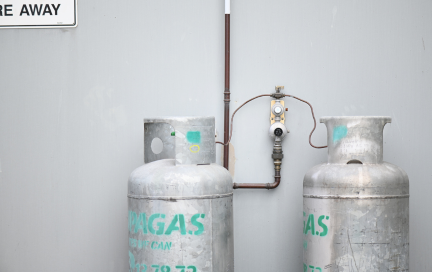
Depending on the installation, a separate first-stage and second-stage arrangement may be appropriate. In this type of system, the first-stage regulator reduces cylinder pressure to an intermediate pressure, while the second-stage regulator reduces it again to the pressure required by the installation. An integral dual-stage regulator carries out both pressure reductions within the one regulator body.
Separate first- and second-stage arrangements may be used where cylinders are a significant distance from the appliances, where gas needs to travel through a longer supply line, or where the installation has been designed with the second-stage regulator positioned closer to the appliance load.
What can happen when a regulator is undersized?
An undersized regulator might not make itself obvious straight away. One appliance may operate normally. The problem may only appear as demand increases and several appliances begin operating at the same time.
Depending on the installation and appliances, signs can include:
- Appliance performance dropping during periods of high demand
- Smaller or unstable flames
- Instantaneous water heater performance deteriorating
- Appliances failing to ignite or unexpectedly shutting down
- Outlet pressure falling below the appliance manufacturer’s requirements.
This is why the total demand of the installation matters at the selection stage. A regulator needs to be sized for the conditions it will actually be expected to handle, not simply how the installation performs under a light load.
Commissioning helps confirm the setup
Correct selection is only part of the job. Commissioning provides an opportunity to confirm that the completed installation performs as required. A static pressure reading alone doesn’t show how the entire installation will perform as demand changes.
The commissioning process should include checking inlet and outlet pressure and assessing the installation while all relevant appliances are operating at maximum simultaneous demand. Appliance ignition and operation should also be checked, along with flame characteristics where applicable. For split-stage systems, first- and second-stage operation should also be confirmed.
Match the regulator to the installation
There isn’t one regulator setup that’s right for every job. The starting point is understanding what the installation requires: the gas type, total maximum demand, pipework, supply arrangement and the pressure requirements of the appliances being supplied. From there, the appropriate regulator type and capacity can be selected for the job.
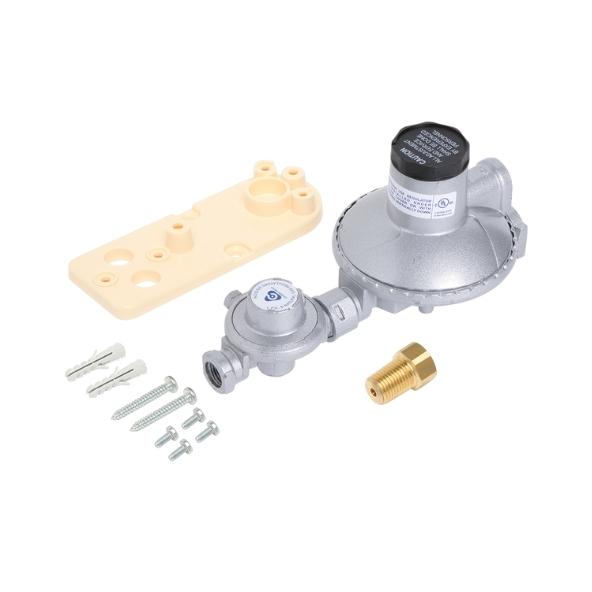
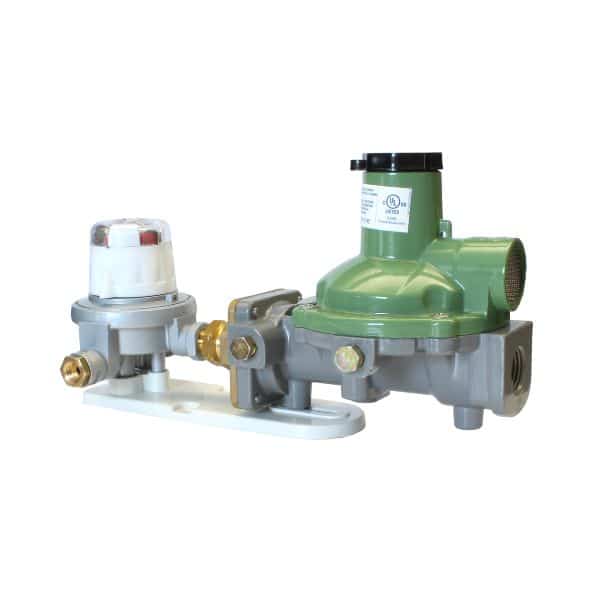
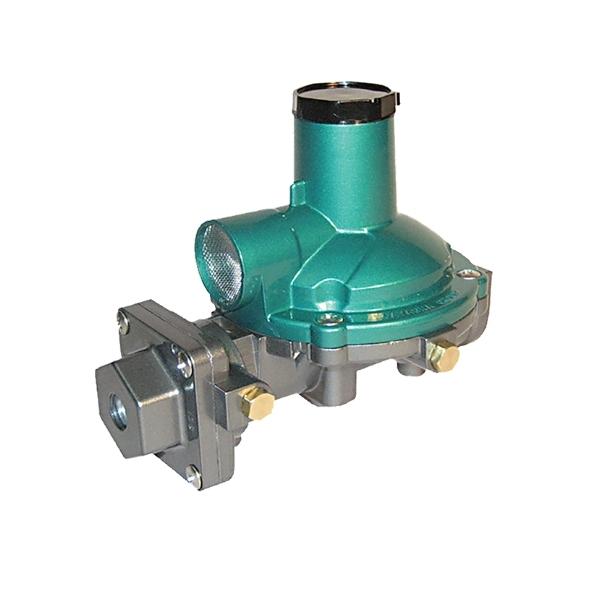
Bromic’s gas regulator range includes single-stage and dual-stage regulators, first- and second-stage options, manual and automatic changeover regulators and regulator kits for a range of LPG and Natural Gas applications.