Account





Favourites
Sign in to your account
By adding to Favourites, you can…
- Save products or resource documents you view regularly
- Save time with quick access to frequently viewed items
Please sign in or create an account to add to your Favourites.


Articles
April 14, 2026
Winter Readiness: The Compliance Checks That Turn Every Job Into Billable Work
Many heaters are stored, often incorrectly, over the summer months. Consumers need help understanding the safety risks and the proper procedures to commission their gas appliance for the new winter season. In this article, we’ll outline how to assist your customers in heating their homes safely by offering to inspect and service their gas heater during your next call-out.
Key Takeaways
- Every winter call-out is an opportunity. If you’re not checking the gas heater while you’re on site, you’re leaving easy, compliance-backed work behind.
- In NSW, quick hose, bayonet and installation checks routinely lead to replacement, relocation or reconfiguration jobs that are simple to justify to clients.
- In VIC, recurring servicing and CO testing on flueless and room-sealed heaters can be set-up as a repeatable 2-year service program, not a one-off task.
- The 5-minute add-on check is a core on-site routine that often uncovers billable service, rectification or full replacement work.
- Specifying compliant, certified gas hoses and quality heaters reduces call-backs and builds long-term customer trust.
Servicing a Gas Heater While You’re Already On Site
It’s June 2026. You’re in a Sydney home fixing a leaking tap, and there’s a portable gas heater in the lounge that hasn’t been touched since last winter.
If you’re not checking the heater while you’re on site, you’re leaving work behind.
The opportunity to service a gas heater doesn’t always start as a heater job. It may come up in a generic call-out where the customer already trusts you and heating is clearly in use. Offering quick checks link directly to safety concerns around carbon monoxide, better performance, and compliance obligations.
The Missed Work in Every Call-Out
The problem isn’t that plumbers and gasfitters don’t know about gas heater servicing, it’s that they walk past heaters daily without turning them into compliant, billable tasks.
By mid-winter, most homes are running portable gas heaters daily, often with no documented service for 3–5 years. You already have access, the customer’s trust, and a clear visual of the appliance in their home.
Heater checks are ideal add-on work because they’re:
- Fast to perform (5–10 minutes triage)
- Visible to the customer (frayed hose, yellow flame)
- Easy to explain in plain language
- Backed by Australian standards
Build a simple script: ask when the heater was last serviced, whether anyone has noticed headaches or gassy smells, and whether CO testing has been done.
NSW: On-Site Triggers for Extra Work While Servicing Gas Heaters
In New South Wales, hose age limits, bayonet placement rules and installation standards mean most living-room heaters you inspect in 2026 will present at least one compliance issue worth quoting on.
Hose Assembly: Age and Condition
Portable gas heater hoses should be treated as consumable safety components. A gas hose dated 6+ years old should trigger replacement, even without visible damage.
What to check:
- Locate the date stamp on the hose assembly (e.g. “04/20” = April 2020)
- Anything dated before 2020 should be flagged for replacement in winter 2026
- Visible cracking, kinks, scorch marks or flattened sections require immediate action
Customers understand worn rubber when they can see it, so show them anywhere their hose is damaged.
Job outcome: Supply and fit a new certified gas hose assembly ($150–250 including fit and certificate).
Bayonet Location and Setup
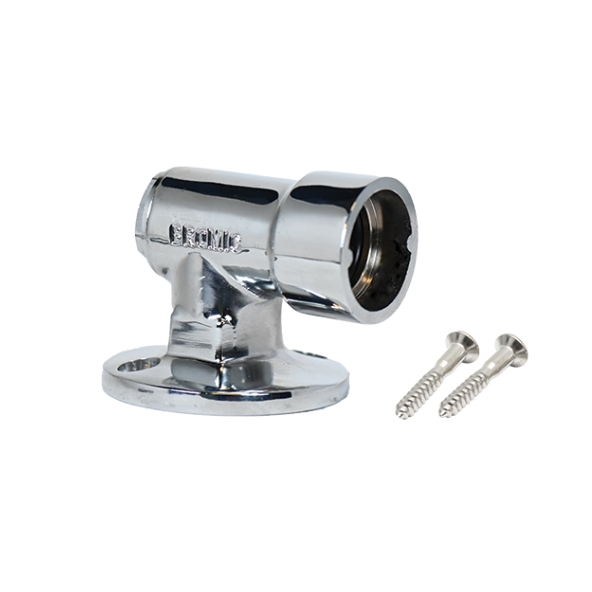
Check the typical living-room setup: a bayonet outlet near a doorway where the heater cable crosses walking paths.
Red flags:
- Bayonet within 1m of a doorway or sliding door
- Hose running under a rug or across a passage
- Gas hose located in high-traffic areas creating tripping hazards
A 2023 Gosford case involved a bayonet 0.8m from a sliding door causing hose abrasion which lead to an $800 relocation job including new copper spur and compliance certificate.
Job outcome: Bayonet relocation or reconfiguration ($400–600).
Installation Compliance and Hose Type
During the service, confirm the gas heater type and ensure the hose and bayonet configuration matches requirements.
Common non-compliant installs:
- Wrong hose type fitted to the appliance
- Makeshift fittings or adapters
- Flued units operating as flueless
Older heaters (10+ years) with questionable history may be better replaced than repaired.
Job outcome: Full heater replacement with proper bayonet installation and certified hose assembly ($1,200+).
Usage Risks You Can See on Site
Look for heaters dragged across rooms with hoses stretched tight, lengths over 3m creating loops, or units too close to curtains. Installation standard AS 5601.1 and Clause 5.9.1 limits flex hose to a continuous length of max 3m, so anything over 3m, or 2 hoses joined together to create a longer hose, is non-compliant.
Photograph obvious hazards (with permission) for the job file.
Job outcome: Immediate rectification, shortening hose length, rerouting, or recommending a safer heater type.
VIC: Turning Service and CO Testing into Recurring Work
Victorian regulators emphasise regular servicing and carbon monoxide testing, especially after high-profile CO incidents. This creates a built-in recurring work stream.
Standard Service Expectations (Every 2 Years)
All Victorian gas heaters should be professionally serviced at least every 2 years by a licensed gasfitter who is trained in CO risk detection, with testing including the flue and ventilation checks.
A 2022 ESV report showed 40% of inspected units were overdue by 3+ years.
Standard service includes:
- Cleaning burners, fan and filters
- Checking pilot assemblies and thermostat
- Inspecting seals and casing
- Updating service stickers with date and licence number
Job outcome: Schedule the next appointment before leaving! Turn one-off gas heater servicing into predictable repeat work ($200–350 per service).
CO Testing: Where You Add Real Value
Carbon monoxide testing should be presented as a core part of your service, not an optional add-on. Energy Safe Victoria’s Gas Information Sheet 38 sets out a specific method for central and room sealed space heaters. Servicing and CO testing must follow AS 4575 and AS/NZS 5601.1, which include CO spillage testing for heaters with flue systems
Basic steps:
- Take background CO reading for the room (<2ppm safe)
- Operate heater under normal conditions for approx. 10 minutes
- Test for leak or spillage around the appliance and flue
- Pay particular attention to lower parts of the heater where condensate drains may leak
A 2008 open-flued heater in a renovated Brunswick unit failed spillage tests after new double-glazed windows were installed, leading to a room-sealed replacement recommendation.
Job outcome: Service + CO test bundle ($300–450), fault rectification, or replacement recommendation.

Where the Service Jobs Come From
Common triggers to look for:
- No recorded service history
- Recent renovations altering ventilation
- Older appliances in bedrooms or small living areas
- Customer complaints about condensation or stuffiness
Real estate and strata managers increasingly prefer using the same licensed technician every 2 years across multiple properties.
The 5-Minute Add-On Check: Your Core Servicing Tool
Job outcome: Convert one-off attendance into an ongoing service agreement covering all heaters in a landlord’s portfolio.
This quick inspection can run during any site visit, whether you’re changing tapware or fixing a blocked waste.
Step |
Action |
|---|---|
| 1 | Ask last service date |
| 2 | Inspect hose condition and age |
| 3 | Check bayonet position |
| 4 | Review hose routing and length |
| 5 | Visually assess ventilation and perform CO check |
| 6 | Check certification & compliance |
Present this as a free “winter safety check.” Any issues then become quoted work on the spot.
5 minutes on site can add a full service or replacement job.
Specifying the Right Replacement During Heater Servicing
Once compliance issues surface (worn hose, failing CO test) specify replacements that fix the problem the first time.
Choosing Certified Hose Assemblies
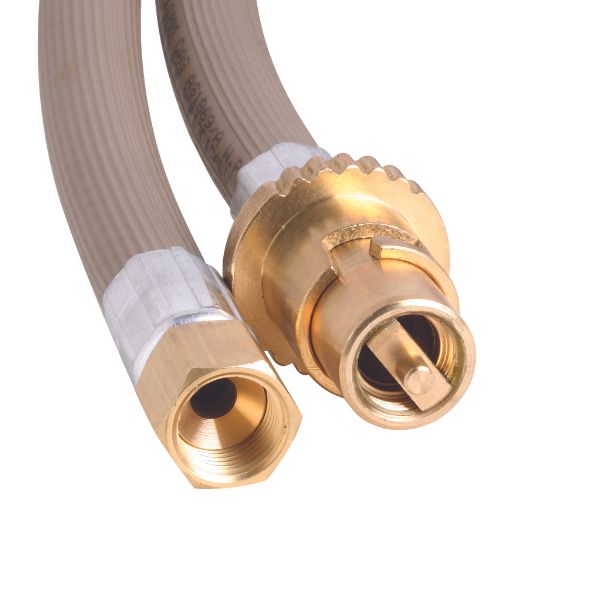
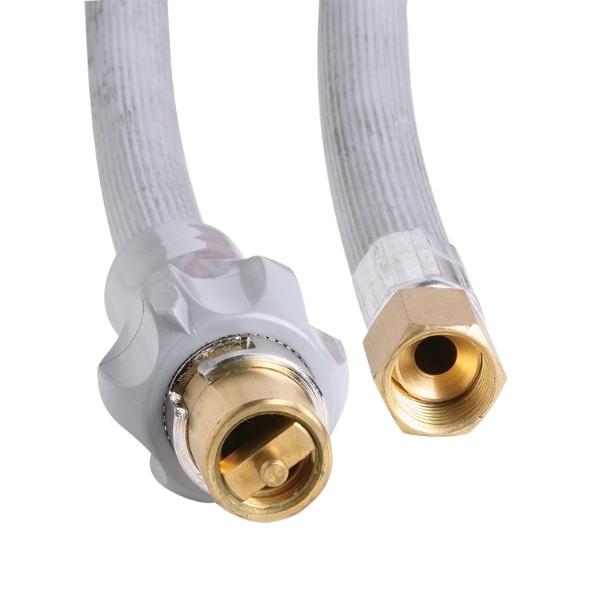
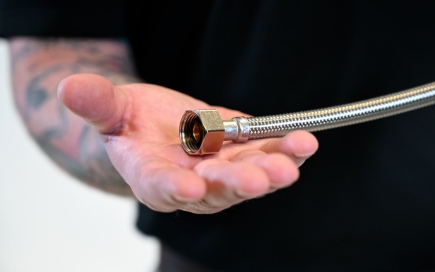
Any gas hose replacement should use a certified gas hose assembly compliant with Australian standard AS 1869.
- Use typical lengths (1.5m or 3m) – longer than necessary increases risk, and longer than 3m is non compliant
- Match gas type (LPG from cylinders vs natural gas from mains)
- Ensure compatibility with standard bayonet connection and fittings, and compliance with AS/NZS 5601.1
Having the right hoses, such as an indoor flueless heater hose, on the vehicle means going from “this is unsafe” to “it’s now compliant” in a single visit.
Recommending the Right Heater Type
When servicing reveals a heater beyond safe repairs, provide clear upgrade options.
| Heater Type | Best For | Key Benefit |
|---|---|---|
| Flueless portable* | Large, ventilated living areas (>25m²) | Affordable, designed for open spaces |
| Room-sealed wall unit | Bedrooms, small spaces, airtight homes | Zero indoor CO spill, safer installation |
| *Not for installation in VIC or SA. | ||
Present gas heater options in terms of safety and long-term compliance, not just price.
Winter Close: Turning Compliance into Billable Work
Winter (June to August) is when gas heaters work hardest, risk is highest, and customers are most receptive to discussions about safety.
Compliance checks carried out as part of servicing, in both NSW and VIC, not only ensure homes are safe from gas leaks and carbon monoxide but reveal honest opportunities for additional work.
Make heater inspections and quick CO checks a standard part of every cold-season call-out. Recommend your customers have their gas heater servicing completed in Autumn (April to May) to avoid issues when they need their heater most.
The work is already in front of you. Compliance just makes it billable.
Review your current winter processes, add these heater servicing checks to your routine, and ensure you’re ready with compliant hoses and heater stock before the season peaks.